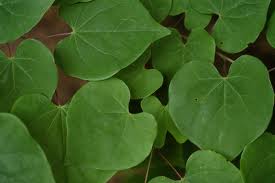
The redbud may indeed be the poster child for Discovering Wood. It is one of those woods that you have to kind of “luck into”. You can’t go to the average lumber supplier and buy 110 board feet. Even small owner-operated mills are rarely going to have Redbud lumber in any quantity, BUT it is a perfect example of the domestic exotics that we can harvest and mill in our own shops.


I “happened upon” a large redbud trunk early last summer when a storm decimated the over 100-year-old tree standing in my father-in-law’s farmyard. The original owner of the property said that her grandfather specifically planted the Redbud sometime in the 1890s. The center of the trunk had been ravaged by ants, termites, or some form of wood-eating insect over the years, and this is probably what ultimately made the trunk susceptible to wind damage. The logs had already been bucked into two-foot lengths when I arrived, which precluded any long lumber, but what remained was perfect for home milling. I retained some of the largest chunks and burls for turning blanks (along with any other chunky bits) and milled a fair bit into thin lumber. (More on my process in future posts).
The Numbers:
Specific Gravity | Density (#/cf) | Janka Hardness | “Shrinkage Ratio” |
0.6363 | 39.65 | 1000? | ??? |
The reported specific gravity is 0.6363 (comparable to Ash) and density of 39.65 #/cubic foot (comparable to Walnut). I’m trying to figure out exactly what these figures mean. One source implies that specific gravity is the most important predictor of wood strength. I thought it just determined if it would float (ala Salem witch trials). I am equally unsure about the density figure, although I might expect it to relate to hardness or dent resistance. If you have any insight, please let me know. The other figure I came across is the Janka hardness scale (measured in pounds (or kilograms) of force required to press a roughly ½” diameter steel ball into the wood ¼”), although I have been unable to find a Janka number for Redbud. If the Janka number correlates in any way with density, then we might assume that Redbud’s Janka is approximately 1000 (ie. softer than Red Oak but harder than Red Cedar) which is about how I would say that it behaves.
The other thing I have noticed is that Redbud has a tendency to split as it dries (even when the endgrain is sealed). I have not had this issue with boards (although my boards are approx. ½” thick), but chunks left for turning are prone to split. I am still working out what numbers would lend a predictability to this tendency. On other species, I have seen numbers for the percentage of shrinkage from green to dry (both tangential and radial); perhaps the predictor is a ratio of these two numbers, as it would define shrinkage stresses. I will investigate this further. For now, let’s call this the “shrinkage ratio”.
Please bear with me as I compile and define some of these “technical” details.
 |
| Freshly milled boards. The top board is partially planed. |
On the practical side:

The most surprising thing about Redbud is the color. The wood is a mid to dark brown with streaks of red, yellow, and chocolate brown. It is stunning. There are surely growing condition and soil composition factors that determine how the wood ultimately looks. I don’t know what those are, but I have seen an array of appearances in Redbud lumber from different sources. I found the wood to be fairly fine-grained. It is a little harder to carve than Black Walnut, but it does hold crisp detail.

 |
| "Redbud Leaves" 2010 |
On an interesting note, Hoadley mentions Redbud among a handful of other specieswhich fluoresce under ultraviolet light. I bought a “blacklight” light bulb from Home Depot and had a lot of fun looking at different woods (I have several of the species); most fluoresce yellow and are really cool to look at but very difficult to photograph. I can only imagine how it would look under a more powerful UV source, such as a woods lamp.
 |
| Redbud's yellow fluorescence under UV light. |